


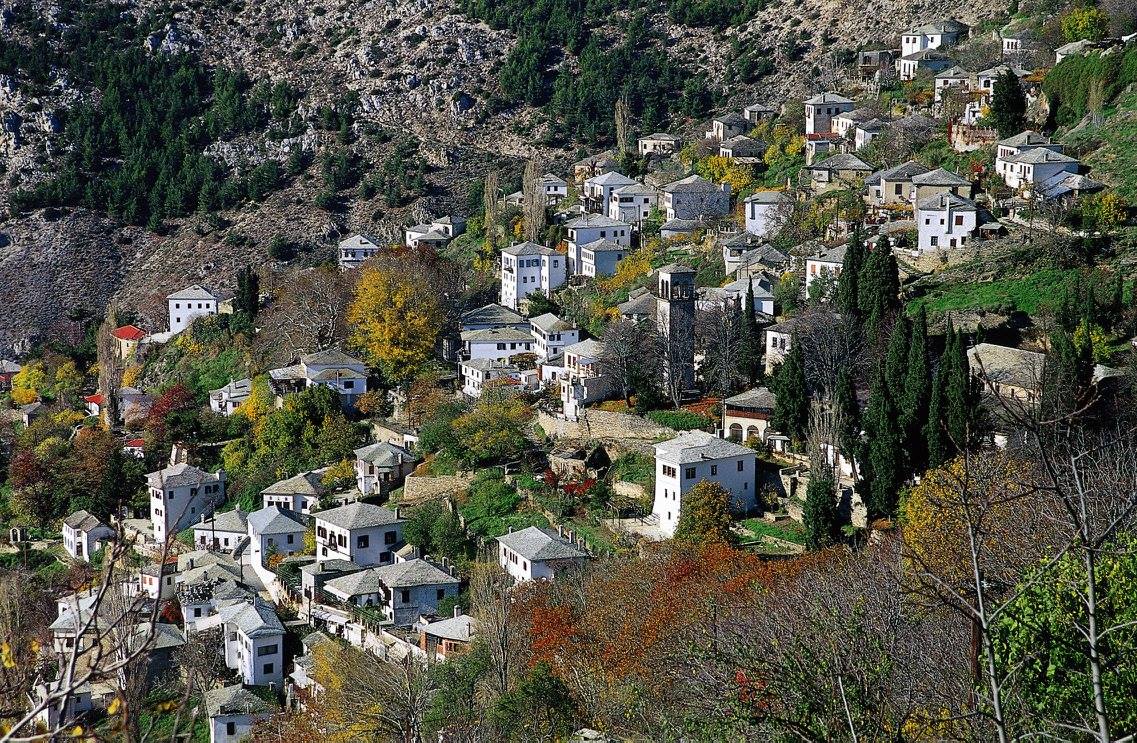
In the heart of Greece, where the slopes of Mount Othrys bow to the Aegean and the Pagasetic Gulf, rises the majestic Mount Pelion. It is not merely a mountain; it is a living organism, a place where nature, history, and tradition weave a veil of enchantment that captivates every visitor.
Known as the summer residence of the Olympian gods and the homeland of the Centaurs, Pelion remains to this day a destination that defies the seasons, offering thrills 365 days a year.
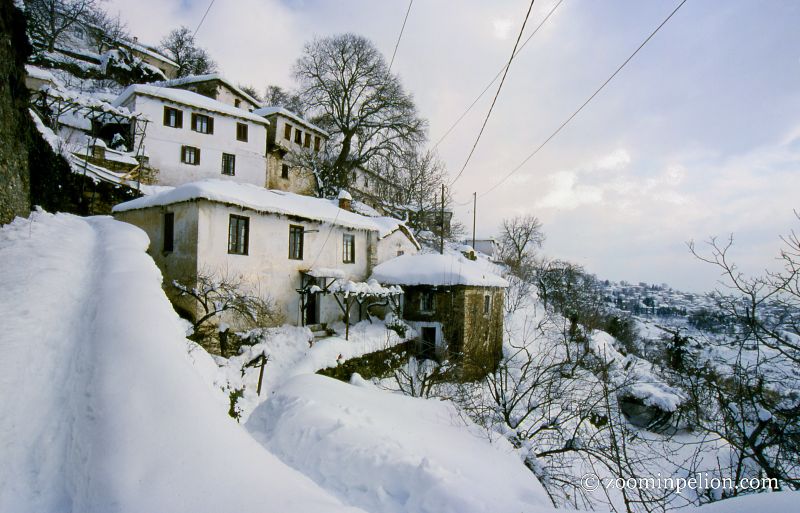
Makrinitsa
A Geography of Contrasts. The primary characteristic of Pelion is its unique ability to combine the mountain and the sea in an almost cinematic fashion. On one side, steep cliffs plunge into the deep blue, wild waters of the Eastern Aegean; on the other, calm, sheltered coves line the Pagasetic Gulf.
The vegetation is lush and diverse. Chestnut, beech, and plane trees, along with countless fruit orchards, create a vibrant green canvas that changes colors with the seasons:
- Spring: An explosion of wildflowers and running waters.
- Summer: The shade of the plane trees provides a sanctuary from the heat.
- Autumn: The slopes are painted in shades of amber and copper.
- Winter: The peaks are dressed in white, with the Agriolefkes ski center offering a rare view of two different seas simultaneously.
The Villages: Architectural Jewels
A tour of Pelion is essentially a journey through traditional architecture. The “Pelion mansions” (archontika), with their thick stone walls, slate roofs, and ornate wooden ceilings, are masterpieces of aesthetics and endurance.
- Makrinitsa: Known as the “Balcony of Pelion.” The view of Volos and the gulf from its central square is breathtaking.
- Portaria: The gateway to the mountain, famous for its crystal-clear springs and luxurious guesthouses that maintain a traditional character.
- Tsagarada: The village of plane trees and flowers. It is home to one of the oldest plane trees in Europe, estimated to be over 1,000 years old.
- Milies: The starting point of the legendary “Moutzouris,” the historic steam train that traverses stone bridges and dense forests, offering an experience from a bygone era.
Gastronomy: Flavors of the Earth
The local cuisine is authentic, hearty, and based on regional products. No visit to Pelion is complete without trying the traditional spetzofai (local sausage sautéed with peppers and tomato sauce).
Must-try Flavors:
- Spoon Sweets: Firiki (small apple), chestnut, and walnut.
- Pies: Greens-pies (chortopita) made with handmade phyllo and mountain herbs.
- Tsipouro: While the tradition started in nearby Volos, in the mountain villages, tsipouro is enjoyed slowly with exquisite local appetizers (meze).
Activities for Every Soul
Pelion is a paradise for outdoor enthusiasts. The network of kalderimia (old stone paths) offers some of the most beautiful hiking routes in Greece, connecting villages through forests and ravines.
For those who love the water, Pelion’s beaches are world-renowned:
- Mylopotamos: Famous for the iconic rock arch that divides the beach in two.
- Damouchari: The only natural harbor on the eastern side, where scenes from the movie “Mamma Mia” were filmed.
- Agios Ioannis: The most cosmopolitan side of Eastern Pelion, featuring turquoise waters and vibrant life.
Spirituality and Tradition
Beyond its physical beauty, Pelion carries a deep spiritual weight. Dozens of monasteries and small chapels, hidden within the greenery, testify to the region’s historical importance during the Byzantine and post-Byzantine eras. The “School of Milies,” for example, was a major intellectual center during the Greek Enlightenment.
Conclusion
Pelion is not just a tourist destination; it is a sensory experience. It is the sound of rushing water, the scent of damp earth, the taste of a crisp apple, and the sight of the endless blue. Whether you seek the isolation and peace of a remote settlement or the thrill of winter sports and maritime exploration, the “Mountain of the Centaurs” will always find a way to whisper its own stories to you.
It is a place that invites you to walk its paths, taste its fruits, and ultimately, fall in love. As the locals say, you don’t just visit Pelion once; you always return.